Thursday, June 20, 2013

Brazil’s unrest: should investors worry?

Prof. Alfedo Behrens / Financial Times

The scenes have been extraordinary. Not only the size of public demonstrations in Brazil’s major cities over the past week but also the violence with which they were met by supposedly elite police units have made for surprising and shocking viewing.
Are investors worried? And should they be?
The short answer to the first question is, apparently, No.

...“What is going on is the result of slow growth and that is unlikely to go away,” says Alfredo Behrens, a professor of management at FIA, a business school in São Paulo.

Monday, June 3, 2013

The City We Want

In about 27 years, the city of São Paulo may be a more humane city where most citizens will be able to live closer to their work, have well-paying jobs and live at fifteen minute walk distance from a small green area or a train station by public transportation. For this to become reality, consistent work for over three or four administrations is required to implement a long-term plan for changing the lives of paulistanos for the better.

For the past two years Profuturo coordinated a long-term strategic planning for the city, known as Plan SP2040. This study, sponsored by the Municipality of São Paulo, involved more than 250 experts from city hall, business firms, universities and, also, consulted over 25 thousand citizens. Its outlined a strategic vision, projects and action programs for the city that resulted in a document that presents both a popular view as a technical vision. The reader must be wondering: how would this dream scenario of São Paulo be?

The city we want will have more housing within its central region, which today is quite well served by public transportation and concentrates a large portion of the city’s employment opportunities. At the same time, the city will be more decentralized, concentrating itself around about 120 regional centers in city neighborhoods that offer transportation, education, housing, services and jobs. It is hoped that every citizen can live about fifteen minutes on foot from recreation areas and that the daily commute to work and study does not exceed thirty minutes on average.

Thus, almost 80% of normal daily activities can be carried out in these  120 "equivalent cities", allowing for a strong reduction in daily commutes and mitigating social impacts from pollution, stress and traffic accidents.

To accomplish its economic potential, São Paulo should embrace its vocation as an international business center. To excel among Latin American cities such as Rio de Janeiro, Buenos Aires, Mexico City and even Miami, we need not only to rehabilitate its infrastructure (transport and communication, especially) as well as train, attract and retain human talent of an international standard. To form talented citizens, universities and professional schools should interact more with the productive sector and encourage entrepreneurship. To attract them, São Paulo should be capable of providing support for their self-development along with that of the companies established here. Finally, to retain talent, the city should be receptive to different cultures and offer an attractive quality of life to skilled and creative people.

To continue to thrive, increasing its GDP without a significant population growth, Sao Paulo must attract economic sectors which generate high added value and innovation. Some of these strategic areas are: health and financial services, education, research and development, infrastructure and urban retrofit, transportation, communication, energy and environmental sustainability. At the same time, the trained manpower for these sectors has to be constantly improved to sustain a decent standard of competitiveness in a global city.

Attracting modern enterprises, training manpower and innovating are required for Sao Paulo to strengthen its role as a national center for logistics, trade and services, efficiently supporting productive activities throughout Brazil. According to our projection models, this trend will make our city reach in 2040 levels of per capita income and human development index (HDI) similar to those of the cities of Mediterranean Europe today.

During the next three decades São Paulo is expected to maintain growth rate around 15% lower the average growth of the Brazilian GDP, in line with the necessary reduction of regional inequalities and income distribution in our country. However, this growth will be sufficient for São Paulo to become the most important and prosperous city in the southern hemisphere, the center of financial services for global investment in South America and the headquarters of most major international companies in the region.

This is a possible scenario for thirty years in the future, ie, in just one generation. As methodological coordinator of SP-2040 plan, I have confidence in the prospect of implementing the proposals made, which were validated by a sample of 25 000 citizens. In addition to personal convictions, other studies support our belief in the desired future perspective. Recently, we have coordinated an analysis of São Paulo as part of an international study of 12 large cities in developing countries. The results showed that São Paulo inhabitants have a very critical view of the city, even on subjects in which objective data show that we are better off than other large cities in emerging countries.

This combination of critical vision and our historical capability to work for a better future can certainly lead us to our desired scenario of the City of São Paulo that we all want. To do so, we must work together, stay focused on future goals and not allow demagogic deviations from common goals of quality of life improvements and better opportunities for future generations.

Prof. James Wright
PROFUTURO-FIA

Executive, International & Americas MBA

Friday, February 22, 2013

Thoughts on Business Leadership in Emerging Markets: A Side Effect of Economic Colonialism or Simply Poor Management?

The strategic function of a top business leader, with its vision-forming, persuading, and control abilities, spans much of what has been traditionally viewed as the fi eld of leadership research. While some leaders speak or write about leadership without having led many businesses, others who have led lack the capacity for refl ection which is necessary to explain what it is that they do. Yet, most leaders seem to have something to say, and they fi nd eager listeners. Are MBA candidates being misled by the business press and thus are unable to tell a real leader from a fraud? Or is it that those we call business leaders today are only fi gureheads propelled by those toiling beneath them? This commentary focuses on thoughts centered on the rim of contention: business leadership in Brazil. 

Introduction

The strategic function of a top business leader, with its vision-forming, persuading, and control abilities, spans much of what has been traditionally viewed as the field of leadership research. While far from exhausted, the drift toward studying the rest of the organization and its environment has been both substantial and refreshing. Nonetheless, there is a strategy-forming process that remains mostly in the realm of top corporate leadership, which has been the focus of some attention within the last decade.1 Interestingly enough, the role of succession remains largely within top management, which brings up the question of an organization’s capacity to learn from its environment. There seems to be no barriers to entry into the business leadership literature arena. While some leaders speak or write about leadership without having led many businesses, others who have led lack the capacity for reflection which is necessary to explain what it is that they do. Yet, most leaders seem to have something to say, and they find eager listeners. Because publishers know there is a seller’s market in leadership books, they go so far as to resurrect authors long dead for hundreds, if not thousands, of years. In fact, business leadership is one of the most prolific areas within management literature. What follows are my thoughts focused on the rim of the contention: business leadership in Brazil. I chose to explore this topic because many of my graduate MBA students barely have any notion of what a true business leader is. When asked to name a few leaders I expected to hear the names of Juan Domingo Perón, for Argentina, and Getúlio Vargas, for Brazil, founders of some of the region’s largest and most prominent businesses. Alternatively, I would have expected my students to mention Casimiro Montenegro, who founded the Brazilian Aeronautical Technology Institute to lay the foundations of a healthy Brazilian aeronautical industry and helped to midwife Embraer, a world leader in midsized jet planes. 


Featured article by Alfredo Behrens in Thunderbird International Business Review 
Vol. 55, No. 2 March/April 2013, pp 228-234.  DOI: 10.1002/tie.21537 


Friday, February 1, 2013

Medical Diagnostic Laboratories Might Provide Executive Search Services

As there are many ways to skin a cat there are many ways to classify personalities. By now it is hard to find an executive who has not heard of MBTI, or DISC or so many others.  But the fact is that despite the differences pointed out by all those tests, it does not seem to be enough to understand what makes us click with one another. Sad, because clicking is work-effective and we should know more about it.

This is why research into what makes people fall in love with each other may provide leads, if not answers. Helen Fischer has been an expert on the subject for over three decades, just the type the CEOs of Match.com, the dating site, would put the questions to:  “Why do you fall in love with one person and not the other?”
The question is particularly important at the Brazilian executive-level  workplace, for if socioeconomic background were determining, one would not find in Brazil as much diversity as in America, and still, people fall in love with some rather than any other. Of course the kind of empathy one needs to work effectively together is not the same as required in a fulfilling love relationship, but still, think more freely and figure out what is out there.

As it turns out, Prof. Helen Fisher, at Rutgers,  is what is called a biological anthropologist (new to me too) and she figures out that in biological terms there are only four systems linked with personality traits: dopamine, serotonin, testosterone and estrogen. Hired by Match.com she had access to its affiliate: Chemistry.com and worked on a sample of almost 180 thousand people form about 30 countries  and she found correlation between the chemicals above and personality traits which she named: Explorers, Directors, Negotiators, Builders.

Those higher on the expression of the dopamine system tend to be curious and spontaneous, creative and open-minded, and inclined to abstract thought and big ideas. These were named the Explorer types.
Those whose system is more testosterone driven tend to be focused, analytical, action oriented, rather impervious. These were named the Directors’ group.
Those higher in the oestrogen system tend to be more intuitive, more perceptive of underlying connections, and nurturing. These she called the Negotiators.
Those high on serotonin tend to be more conventional, rule-abiding, and specific. These are the Builders.

You wouldn’t be very wrong if you found all of this is not much off MBTI or even Patricia Pitcher’s classification into Artists, Craftsmen and Technocrats, which I happen to find good enough. In any case, if Fisher’s (not Pitcher’s) classification were to stick, it might not be long until we find headhunters superseded by blood laboratories who would receive CEO staffing  requests like: give me one with a 50% dopamine + 30% Testosterone + 15% oestrogen +5% serotonin. If the request were for a compliance officer you would do well in spiking the serotonin share.

Find more at:


Alfredo Behrens
Professor, Cross-cultural Leadership
FIA Business School
February, 2013

Tuesday, October 2, 2012

Trip to USA - International Executive MBA Group


Our International Executive MBA group together with some other FIA students headed to the US for one of the international modules last September. Owen Graduate School of Management – Vanderbilt University, hosted us for a whole week of organized lectures and activities. Entrepreneurship, Innovation, Strategy, Decision Making and Managing Change were some of the class topics that were held during our stay. 

We also enjoyed several visits to outstanding companies. FEDEX innovated by creating the overnight delivery industry, and we visited their super hub in Memphis from 11:00 pm to 2:00 am, when hundreds of airplanes converge from all over the world with cargo and correspondence which is delivered by 10:30 am the next day. An intense and superbly managed operation does this incredible task in a short period with wonderful precision.

At Nissan, we toured the most productive car factory in the USA, where Japanese techniques meet American workers and robots help productivity and quality. Production is being set up at the Smirna plant which we visited for the all-electric Nissan Leaf, as well as battery manufacture, while producing some of the bestselling traditional Nissan cars on the Market.

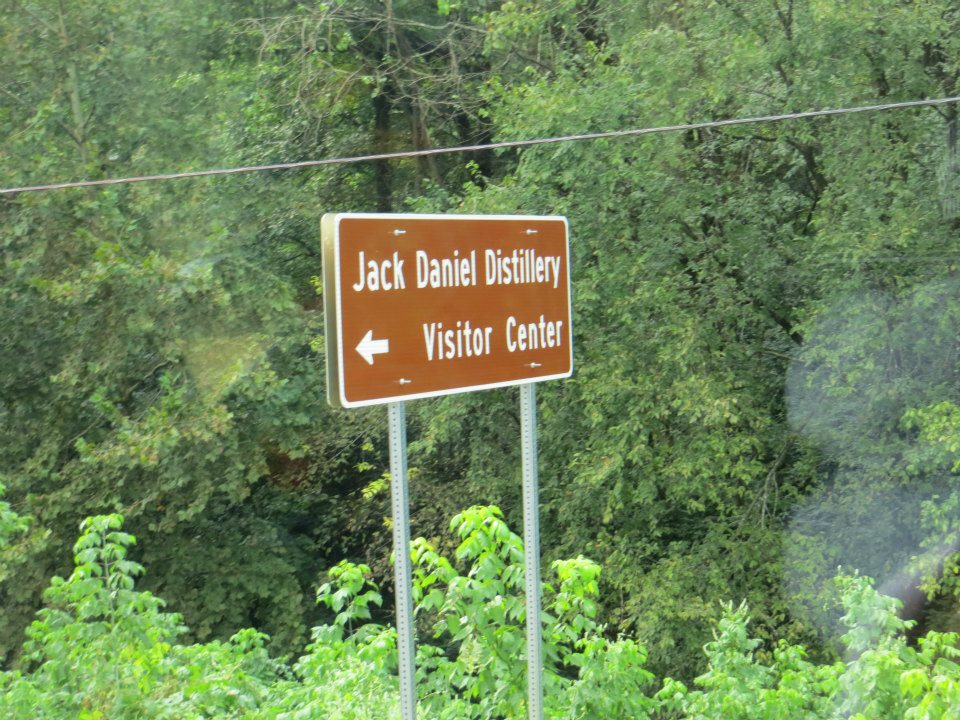
Jack Daniels was also a great visit! In this small town near Nashville, the world’s 5th largest selling whiskey brand is produced integrating the most traditional production systems in the US with modern marketing techniques that make the Tennessee whiskey a global success for generations.

And as we were in Nashville, the opportunity to visit country music clubs and venues like BB Kings was an obligatory part of the experience!

Great classes, exceptional companies and a good time were had by all.

Learn about Vanderbilt our long term partner in this and many other initiatives in both research, student exchange and teaching, with the Owen Graduation School of Management:  
For the past 25 years, the Vanderbilt Executive MBA has remained one of the premier, full 60-credit MBA options for busy executives. Consistently ranked in the top 25 in Business Week’s poll of Executive MBA programs, Vanderbilt’s EMBA program is proven to help mid-career managers, executives, and business owners achieve their personal and organizational goals.
All of their programs at the Vanderbilt Owen Graduate School of Management come with a promise to students:
“Here is a place where you will be challenged to achieve your potential; find support as you shape your future; discover lifelong friends and mentors; and open doors to new possibilities.”


Monday, September 10, 2012

PROFUTURO-FIA recieves Imperial College Business School visit


Last Monday 10th September, PROFUTURO-FIA had the pleasure to receive the Executive MBA group from Imperial College Business School.

During the morning they spent with us, they atended the presentation given by Prof. Simão Silber: "Brazilian Economics and Business Climate". After the break, Prof. Alfredo Behrens presented: "Brazilian cultural roots and the impact on Business Practice. "

"It was great to give a talk to Imperial College's business school again this year at FIA. Imperial brings over a large, diverse and very interesting audience with which one can have very interesting discussions. I only regret the time we had together proved to be too short!" Prof. Behrens said.

One of our students mentioned: "It was a very multi-cultural group. They were interested in what we were doing out here and just speaking to them about Brazil and helping them understand certain themes over lunch made me realise how much I have learnt about this region. There was plenty of potential to make connections with people who might want to do business out here in the future." Toby Barrow – International MBA Full Time at PROFUTURO-FIA.

Sunday, August 19, 2012


Last August, 19th The Americas MBA from FIA Business School initiated its first International Module in Vancouver together with their colleagues from Canada (Beddie School of Business – Simon Fraser University), USA (Vanderbilt University) and Mexico (ITAM).
The Americas MBA prepares executives for leadership positions in international companies with a special focus on the Americas management, economy and culture.
In this occasion, hosted by Simon Fraser University in Vancouver, the global class participated in lectures and debates regarding cross-cultural communications, global business strategy and international human relations management.
Jock Finlayson, Executive VP and CPO at the Business Council of British Columbia, gave an overview lecture on the Canadian and BC economies at this complicated economic moment. Another interesting insight was the panel formed by three business professionals: Amir Sasrabadi, General Manager of Pixar Canada, Fernando Alvarez-Garcia, Head of the Business & Economic Affairs office at the Consulate General of Mexico in Vancouver and Andre Nudelman, President at the Canadian Education Services Latin America. All currently working in Canada but coming from USA, Mexico and Brazil, shared their own experience and views on the business practice differences between the countries.
“The experience in Vancouver at Simon Fraser University through the Americas MBA Program provided a challenging environment and certainly highly different than what we usually find in traditional MBA programs. Beyond networking with international colleagues from Canada, Mexico and the U.S., we had the opportunity to start a consulting project for a real company as part of our final project. I recommend to all who really want a truly international teamwork experience in an International MBA program” says Tibério Maia, Americas MBA, PROFUTURO – FIA.